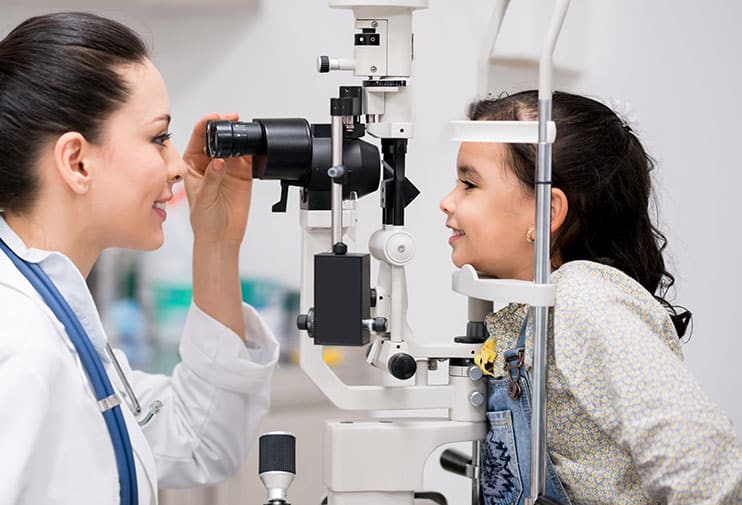

What is Pediatric Ophthalmology

If your child has eye issues, struggles with vision tests, or needs treatment for an eye condition, a pediatric ophthalmologist can provide expert care.

Pediatric Ophthalmology

Pediatric Ophthalmologist

The Department of Pediatric Ophthalmology at Saurabh Eye Hospital deals with the special vision care needs of your children. Here, we have a sub-specialty facility to provide treatment for children's eye problems. In the case of children, vision disorders must be treated at the right time to avoid any serious complications. This is why it is important to detect eye problems in the early stages. Generally, children's eye problems are treated by prescribing glasses to correct minor vision errors and misaligned eyes like squint or amblyopia.

Watch Out For These Symptoms In Children:
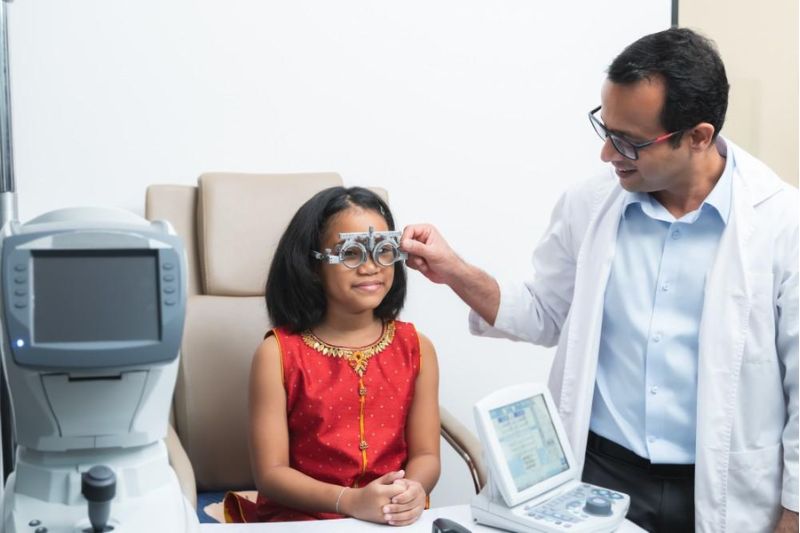
Signs of Eye Issues in Children
  • Bad performance in school especially, while copying notes from the blackboard
  • Squint
  • Regular headache
  • Family history of eye disorder/infections
    Yet, there are certain eye diseases which remain unnoticed and may cause a permanent visual impairment in the child in the future. It is, therefore, recommended getting your child’s (below the age of 3 years) complete eye check-up done, annually.

Services Offered At Saurabh Eye Hospital Pediatric Wing

Your Path to Better Vision, Even with Thin Corneas

For eyes with cornea too thin for making LASIK flap we offer a different technique of Laser Vision Correction, called Photo Refractive Keratectomy (PRK). This is a time-tested technique which give results as good as LASIK.

What Causes Squint In Children?

Causes of Squint in Children

The connection and coordination between the eyes and brain that causes visual pathway usually build up as the child grows. And, this development generally takes place until the tender age of 8 years. So, when the eye muscles fail to work in a balanced or coordinated way, it causes Squint

Squint Is Generally Caused Due To:

  • Refractive Errors: Refractive errors like short-sightedness, long-sightedness and Astigmatism can be a common cause of Squint.
  • Family History: Some Squints are a result of genetic make-up. If a parent has/had a Squint, there are more chances for the child to have this condition.
  • Premature Childbirth: Children born before 32 weeks may be at the risk of developing Squint.
  • Eye Problems: Certain eye problems such as congenital cataract or retinal damage can also lead to Squint.

Squint Is Commonly Categorized As Listed Below:

  • Constant squint: When Squint is prominent and is visible all the time.
  • Intermittent squint: When the squint condition of eyes is not visible all the time.
  • Infantile squint: When Squint is noticed during the initial one year after birth.
  • Acquired Squint: When Squint develops at later stages in a child.
  • Esotropia: When the eye turns inwards towards the nose.
  • Exotropia: When the eye turns outwards.
  • Hypertropia: When the eye turns upwards.
  • Hypertropia: When the eye turns downwards.

If Squint is not diagnosed or treated during the early years, then it can cause a permanent defect. Therefore, it is advisable to get your child’s comprehensive eye check-up done, annually especially before enrolling the child in a school.

Treatment And Surgery To Rectify Squint

Squint in the early years can be easily treated. Depending on the type of Squint, often a combination of treatments may be recommended to get the desired result. Some of the common and hassle-free ways to treat Squint may include:

  • Glasses: Most children with Squint may be prescribed glasses based on their power. It’s important for such children to wear glasses all the time as it enhances their vision and allow them to focus without any difficulty.
  • Exercises: Few exercises help to strengthen the eye’s ability to work in coordination. This treatment is usually used together with glasses and/or surgery.
  • Surgery: Depending on the type of Squint, children may require corrective surgery. Squint Surgery is usually performed under general anesthesia and it does not require any hospital stay.
  • Occlusion Therapy or Patching: This treatment helps to improve vision especially in an individual with the Lazy Eye. During occlusion therapy, a child’s normal eye is covered with a patch, due to which he/she is forced to use his/her weaker eye to see things and perform activities. This therapy helps to develop the visual pathway between the weak eye and the brain.

The operation usually weakens or strengthens the muscles of the eye so that both the eyes are better aligned. Though Squint surgery can be performed at any age; it is more effective if performed during earlier years of human eye. In the juvenile and adults the operation is carried out more for cosmetic purposes. It usually takes several weeks to fully recover from corrective Squint Surgery.

What is Lazy Eye Or Amblyopia?

Causes of Squint in Children
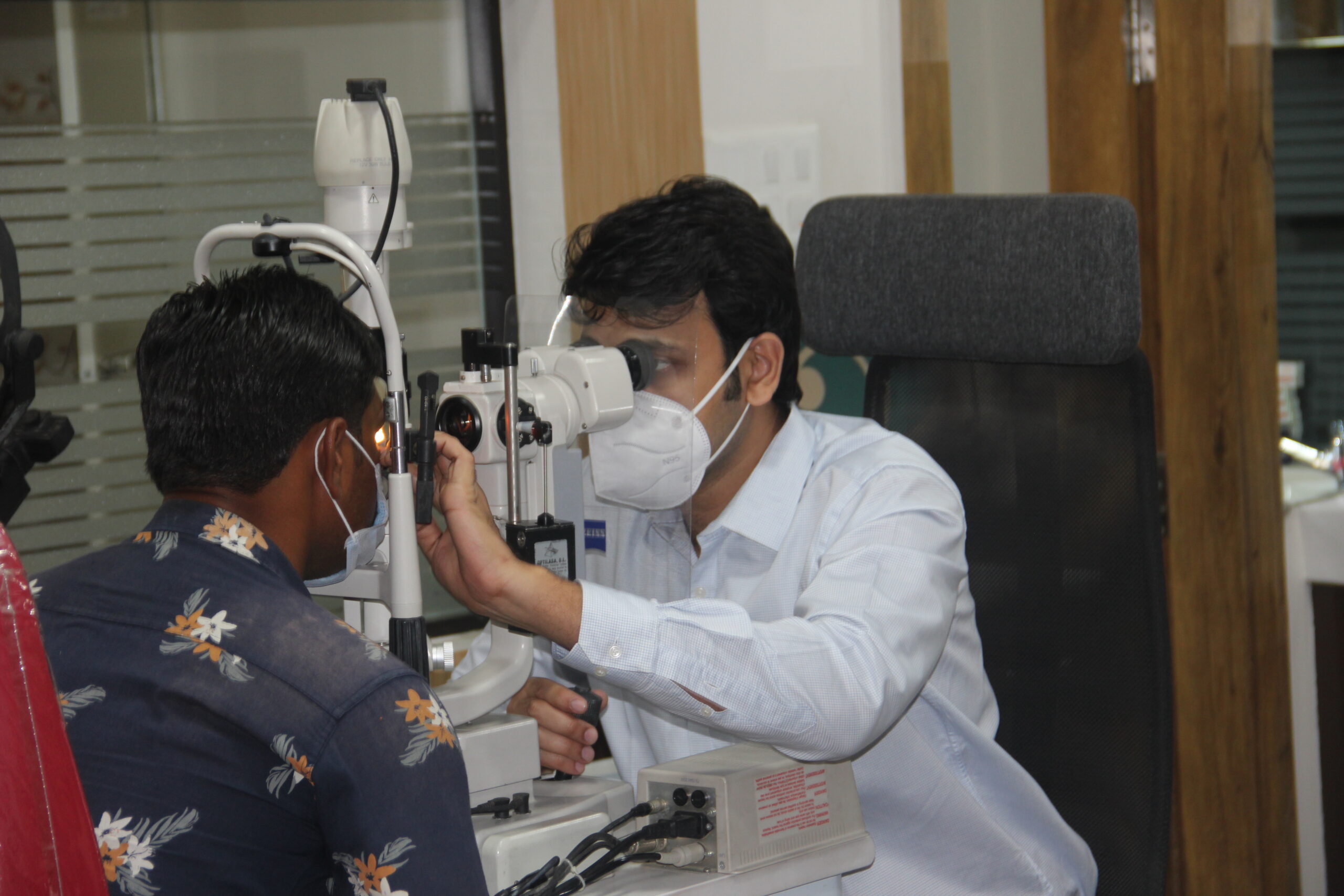
Lazy eye or amblyopia is a developmental problem related to the eye-brain connection where the brain learns to ignore information from one eye which cause blurred vision in that eye. Amblyopia is technically a problem with the brain that tends to get lazy. Lazy eye affects one eye, sometimes reduced visual acuity can occur in both eyes too.

Causes of Lazy Eye Or Amblyopia

  • Squinting eye is said to be the most common cause of amblyopia. If you notice that your child has crossed eyes or eye misalignment, do not delay and schedule an immediate appointment with a pediatric ophthalmologist.
  • It may also be caused due to refractive errors like short-sightedness, long-sightedness, or astigmatism in one eye.
  • Ametropic amblyopia or loss of vision in both eyes is usually caused when a child has extremely high degrees of refractive error that remains uncorrected for a long time.

For the proper treatment of amblyopia, the condition has to be diagnosed and treated preferably before the child turns six. But it is very often missed as young ones usually fail to notice any problem with their vision or eyesight. Therefore, it is important to get your child’s eyes examined before they start with their schooling.

Treatment Options To Correct Amblyopia

It is important to diagnose lazy eye at an earlier stage because the sooner it is treated better are the chances of complete visual recovery. However, if the treatment is started after the child turns eight, the chances of a successful recovery are bleak.

  • Use of patch: during occlusion, the stronger eye is artificially made weak by placing a patch over it to force the lazy eye to work. The child is often made to perform close-up activities such as reading, coloring, etc., while the patch is on so that the brain starts receiving messages from the weaker eye. Duration of this treatment is generally based on the child’s age and also, the severity of the condition. The patch is generally worn with glasses.
  • Eye drops: instead of a patch, the vision of the healthy eye is usually blurred with the help of eye drops to force the weak eye to function.
  • Eye surgery: if the condition is caused due to structural problems like squint or cataract, the corrective surgery may be required to treat the lazy eye.
  • Vision therapy: through this treatment option, the child’s vision is developed by involving them in the exercises and games that require the use of lazy eye more often.