

What is Squint surgery

Squint surgery, also known as strabismus surgery, is a procedure that corrects a squint by adjusting the position of the eye muscles. The surgery is usually performed on the eye that is squinting, but may also be performed on the other eye.
What is strabismus?

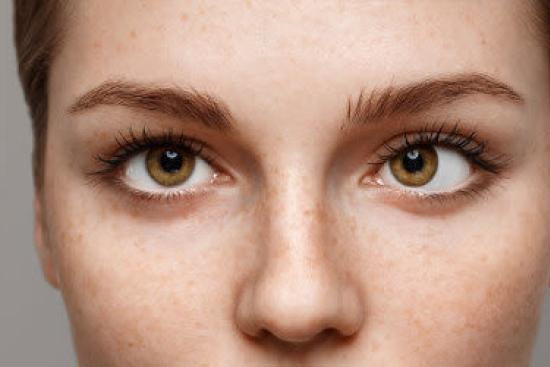
Strabismus, commonly known as squint, is a condition where the eyes are misaligned and point in different directions. One eye may turn inward, outward, upward, or downward while the other remains focused forward. It is a common condition affecting approximately 1 in 20 children, typically developing before the age of five, though it can also occur later in life. Adults can also receive effective treatment for strabismus.


How squints affect vision

Impact of Squints on Vision
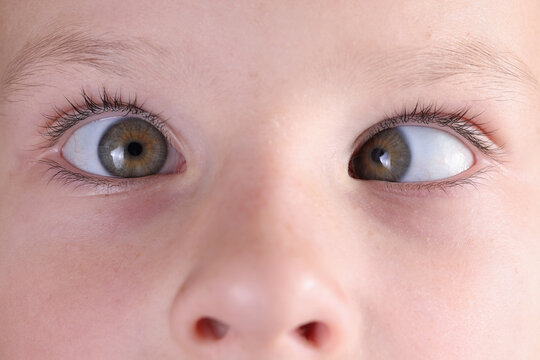
How squints affect vision:The most obvious sign of a squint is eyes that look in different directions. Squints can also cause: double vision; lazy eye(amblyopia) in young children where the vision is poor in the eye with the squint; and a squint can cause people to develop an abnormal position of the head. If a squint is left untreated in young children, lazy eye (amblyopia) can develop. The vision in the affected eye gradually deteriorates because the brain ignores the weaker message being sent from that eye. A lazy eye can be treated up until about six or seven years of age, but it is important that it is treated as soon as possible.

Squint_Surgery
Squint_Surgery

Types of quint and what causes them

Types of Squint and Their Causes

Most often, one eye turns inwards (convergent squint) or outwards (divergent squint). Less often, it may turn up or down (vertical squint). There are different terms for how often the squint is present. If they are there at all times they are termed constant, or if they are only apparent at certain times they are know as intermittent.
Some babies are born with a squint (known as a congenital or infantile squint) and some children develop a squint later (known as a acquired squint). Acquired squints may be caused by the eye attempting to overcome a vision problem, such as short sightedness or long sightedness and genetic factors play a part in many squints, but in many cases the cause is unknown. Rarely, a squint may be caused by a condition in the eye itself.

Treatments for squints

Treatment Options for Squints
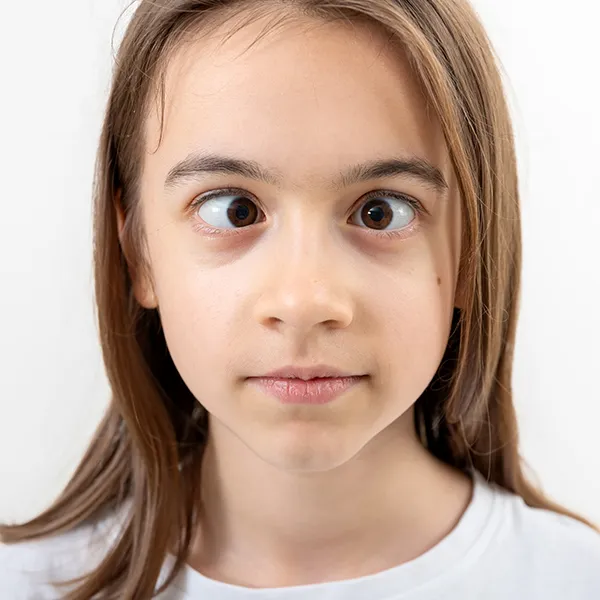
  • Most squints in children need to be assessed as soon as possible to ensure the vision is protected and to improve the chances of successful treatment.
  • Treatments include glasses and, occasionally, eye exercises. If your child has a lazy eye, they may need to wear an eye patch to improve the vision in the affected eye. Many patients may only need the condition monitoring reqularly.
  • In some cases, corrective surgery may be undertaken, most commonly to improve the appearance of the eyes, but sometimes to correct double vision or, in young children, to try and develop the co-ordination of the two eyes to work together for 3-D (depth) vision. Occasionally, surgery is done to improve an abnormal position of the head.
  • Squint surgery is a very common eye operation. It usually involves tightening or moving one or more of the outside eye muscles which move the eye to change the eye position. These muscles are attached quite close to the front of the eye under the conjunctiva, the clear surface layer. The eye is never taken out of the socket during surgery. Stitches are used to attach the muscles in their new positions.
  • Squint surgery is nearly always a day-case procedure, so you should be in and out of hospital on the same day. There are two kinds of squint operation - adjustable and non-adjustable. In adjustable surgery, which can be performed in older children and adults, the stitches can be adjusted shortly after the surgery, when the patient is awake.
  • Risks from surgery are rare, but there can be unpredictability in the exact position of the eyes after surgery and sometimes more than one operation will be needed.
  • Occasionally, squints corrected during childhood reappear in adulthood. You should visit your GP as soon as possible if you develop a new squint.
  • Recovering from surgery It can take several weeks to fully recover from corrective squint surgery.
    During this time, the eye may feel painful or itchy for a short time and you may have temporary double vision.